Websites
Your Website Isn’t a Brochure. It’s Infrastructure for Growth
If your website isn’t built as infrastructure, it’s holding you back. Here’s how to rethink your digital foundation for performance, scalability, and trust.
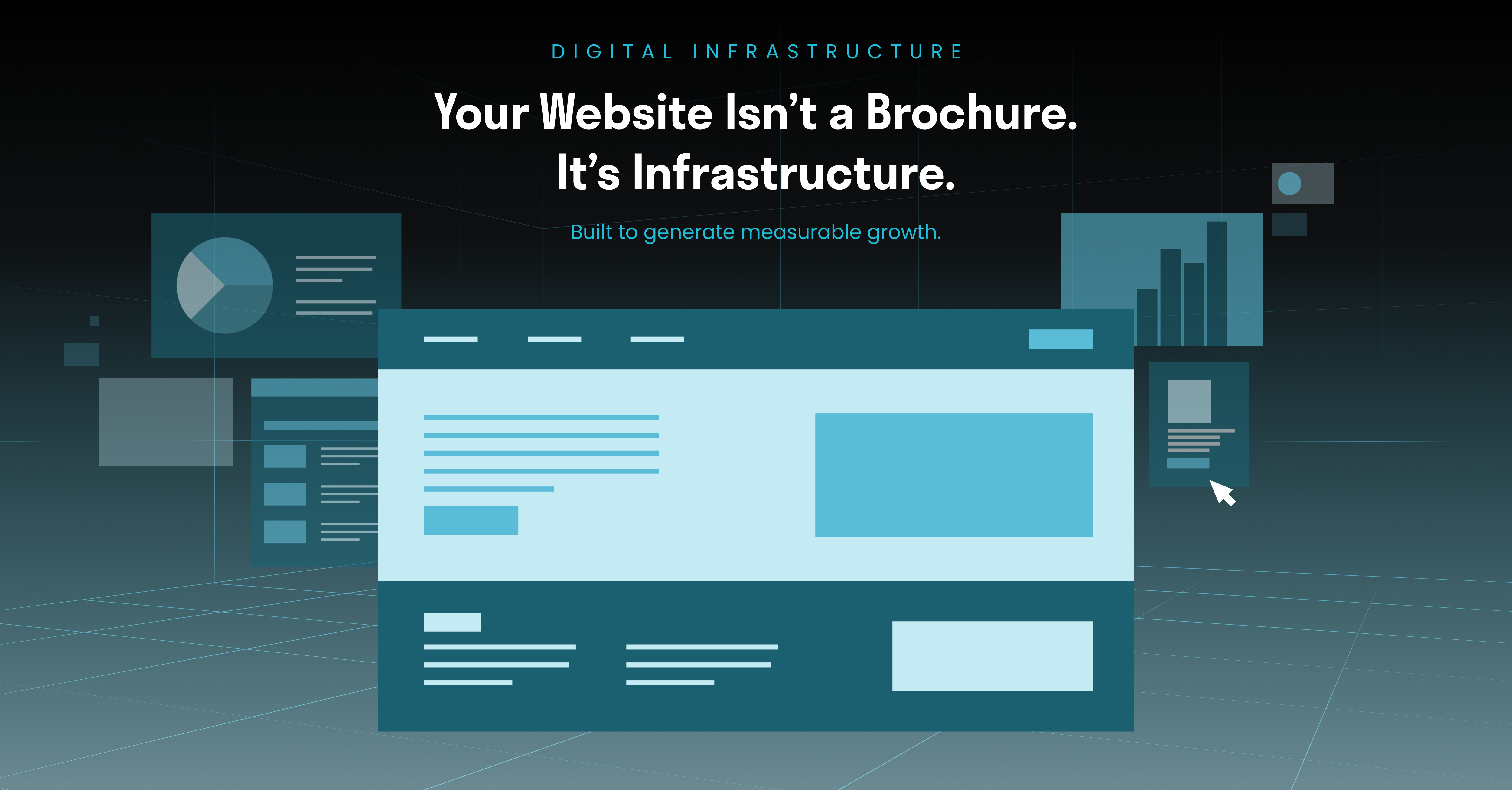
There was a time when a website functioned like a digital brochure. A few pages. A contact form. Basic brand presence. That era is over.
Today, your website isn’t a marketing asset — it’s operational infrastructure. It powers lead generation, customer trust, data collection, automation, SEO, and revenue growth. Yet many companies still treat it like a design project instead of a growth system. That disconnect is expensive.
The Website Myth — Design Over Function
Most website conversations focus on:
- “Does it look modern?”
- “Does it match our brand?”
- “Do we like the layout?”
Design matters. But aesthetics without architecture create friction.
A modern website must:
- Guide user journeys intentionally
- Reduce cognitive load
- Align messaging with buyer intent
- Convert at multiple entry points
Beautiful design that doesn’t convert is decoration. Strategic design is infrastructure. This is where 97 Switch’s design + strategy integration becomes differentiated.
What Website Infrastructure Actually Means
If your website is infrastructure, it should:
1. Be Built for Performance, Not Just Presentation
- Site speed optimization
- SEO architecture
- Clean technical structure
- Scalable CMS (Webflow advantage here)
Infrastructure supports growth without constant rebuilding.
2. Generate Action, Not Just Traffic
Traffic without conversion is noise.
A strategic site includes:
- Clear conversion mapping
- Lead flow segmentation
- Intent-based CTAs
- Layered calls-to-action for different buyer stages
Your site should generate momentum, not just impressions.
3. Sync With Your Marketing Ecosystem
True infrastructure connects to:
- CRM systems
- Marketing automation
- Paid campaigns
- Analytics dashboards
- AI tools
When your site is synced with your ecosystem, you stop guessing and start optimizing. This reinforces your “synced” brand voice pillar.
4. Create Trust at Every Touchpoint
Trust isn’t built in a single headline.
It’s built through:
- Clear messaging
- Proof points
- UX clarity
- Accessibility
- Thoughtful micro-interactions
Modern buyers evaluate credibility in seconds. Infrastructure supports trust. Brochures hope for it.
Where AI Fits (And Where It Doesn’t)
AI can:
- Improve personalization
- Enhance search visibility
- Optimize user pathways
- Generate performance insights
But AI cannot fix weak architecture. If your foundation isn’t built correctly, AI just accelerates inefficiency. Smart companies build infrastructure first — then layer AI strategically. That’s the difference between chasing trends and building sustainable growth.
Why “Pretty” Websites Underperform
Common reasons underperformance happens:
- No defined conversion pathways
- Messaging written internally, not strategically
- No data feedback loops
- No testing roadmap
- No long-term optimization plan
A website launch should be a starting point — not a finish line. Infrastructure is designed to evolve.
The Shift: From Website Project to Growth System
When companies shift their mindset:
From: “We need a new website.” To: “We need stronger digital infrastructure.”
Everything changes. Conversations become strategic:
- What are our long-term goals?
- Where does revenue originate?
- What are friction points?
- What does our data say?
- How do we scale without rebuilding in two years?
This is where 97 Switch’s focus as a long-term partner becomes powerful. We don’t just design sites, we focus on architecting growth systems.
The Question Worth Asking
Is your website built to look good — or built to generate measurable growth? If it’s the former, you’re likely operating with a brochure. If it’s the latter, you’re operating with infrastructure. And infrastructure compounds.
Link → Request a Website Infrastructure Review