Websites
AI Assistants Are Your New Homepage: How to Show Up in ChatGPT in 2026
AI-driven search is changing discovery. Learn how to structure your content, website, and messaging to show up in AI assistant recommendations.
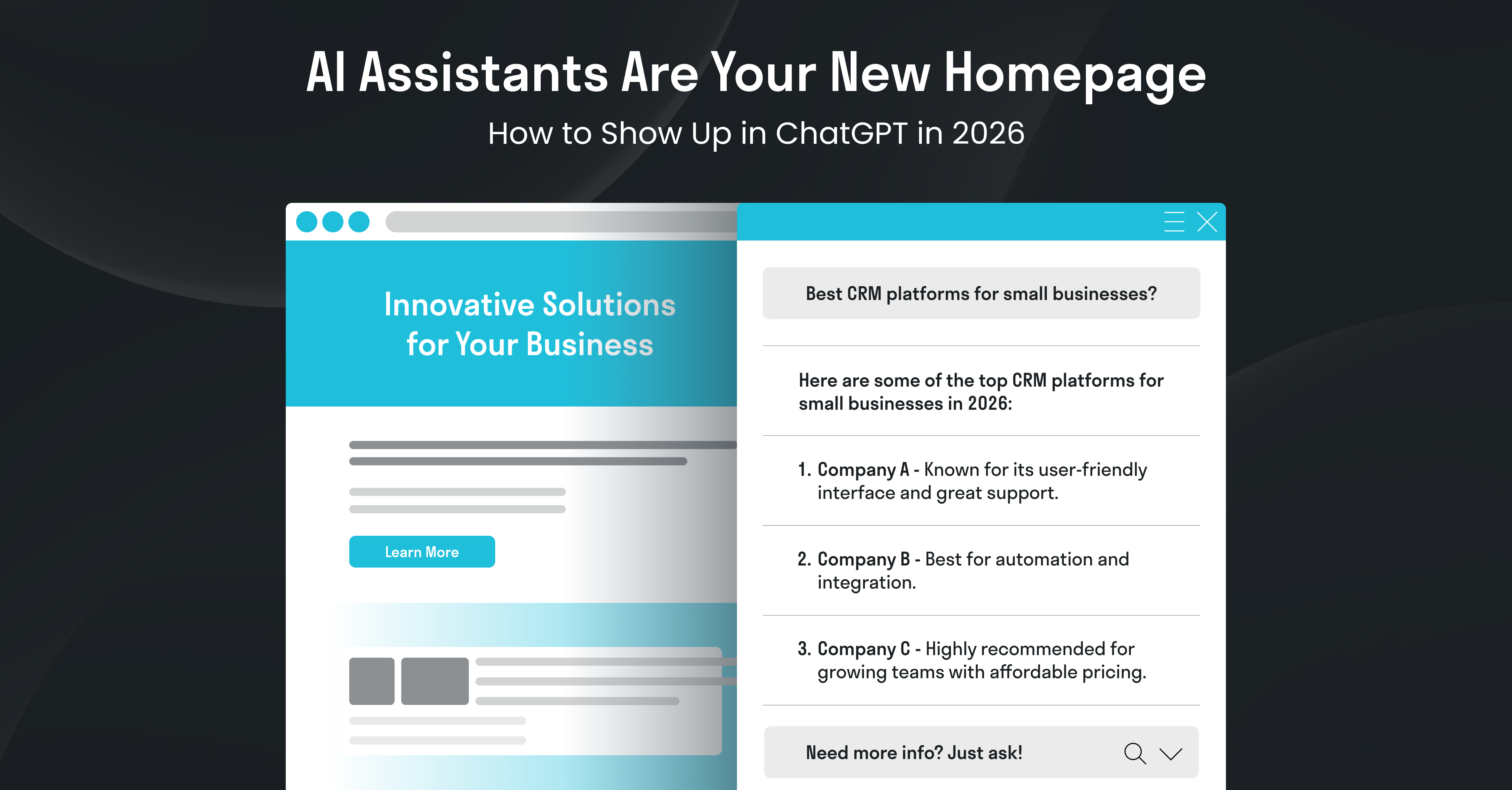
For years, your website homepage was your first impression. In 2026, that’s no longer guaranteed.
More buyers are starting their research with AI tools — asking ChatGPT, Gemini, Perplexity, or Copilot questions like:
- “Best property management software for mid-size portfolios?”
- “Top proptech platforms for tenant experience?”
- “Which vendors compare to ___?”
And the response they get is often their first impression of your brand.
Which means: AI assistants are becoming your new homepage. Not because your website doesn’t matter — but because buyers may form an opinion before they ever visit it.
What “Showing Up” in AI Actually Means
This isn’t just “ranking” like traditional SEO.
AI assistants pull from a blend of signals, including:
- your website content
- structured data / clarity
- reputable third-party sources
- how often your brand is mentioned online
- how consistent your messaging is
So if your brand is unclear, your content is thin, or your authority signals are weak, AI tools may ignore you — even if your product is excellent.
The 3 Things AI Needs in Order to Recommend You
Think of AI recommendations as a trust + clarity system.
To show up, your digital presence needs three things:
1) Clear Category Positioning
AI tools need to understand what you are before they can recommend you.
If your messaging is vague (“transforming the future of…”), AI won’t know where you fit.
Fix it by:
- naming your category clearly
- stating your differentiator
- defining your ideal buyer
2) Structured, Scannable Content
AI systems prioritize clarity and structure.
Pages that perform well tend to include:
- strong headings
- clear bullet points
- FAQs
- comparison content
- concise definitions
- internal linking
This isn’t just good UX — it’s machine readability.
3) Credibility Signals
AI assistants look for “authority” cues.
That includes:
- awards and recognition
- case studies
- third-party reviews
- consistent presence across credible sites
- clear proof of outcomes
In short: AI recommendations are reputation-driven.
What to Do Right Now: 6 Practical Moves
Here are the most effective steps we’re recommending for 2026 readiness:
1) Add an “AI-readable” positioning section to your homepage
One clear paragraph that defines: who you help + what you do + what makes you different.
2) Publish category + comparison pages
Examples:
- “Best ___ software for ___”
- “___ vs ___”
- “Alternatives to ___”
These pages help AI tools map your relevance.
3) Create a robust FAQ hub
Answer the exact questions buyers ask — in clean structure.
4) Make your case studies more specific
AI can’t recommend “great results.” It can recommend measurable outcomes.
5) Strengthen your off-site authority
Get featured in directories, publications, podcasts, partner content, and review platforms.
6) Unify your messaging across touchpoints
Inconsistency creates confusion — for buyers and AI.
The New Reality
Your website still matters.
But the way buyers discover your brand is expanding — and shrinking — at the same time:
- expanding across more touchpoints
- shrinking into fewer “summary” moments
Your job is to make sure when AI summarizes your category, your name shows up — and your positioning is clear.
Want to Know How You Show Up in AI Right Now?
We’re offering a complimentary audit that includes:
- how AI tools describe your category
- whether your brand shows up in key prompts
- what content and authority signals are missing
- the fastest changes to improve visibility
Request a complimentary AI visibility + digital experience audit