Strategy
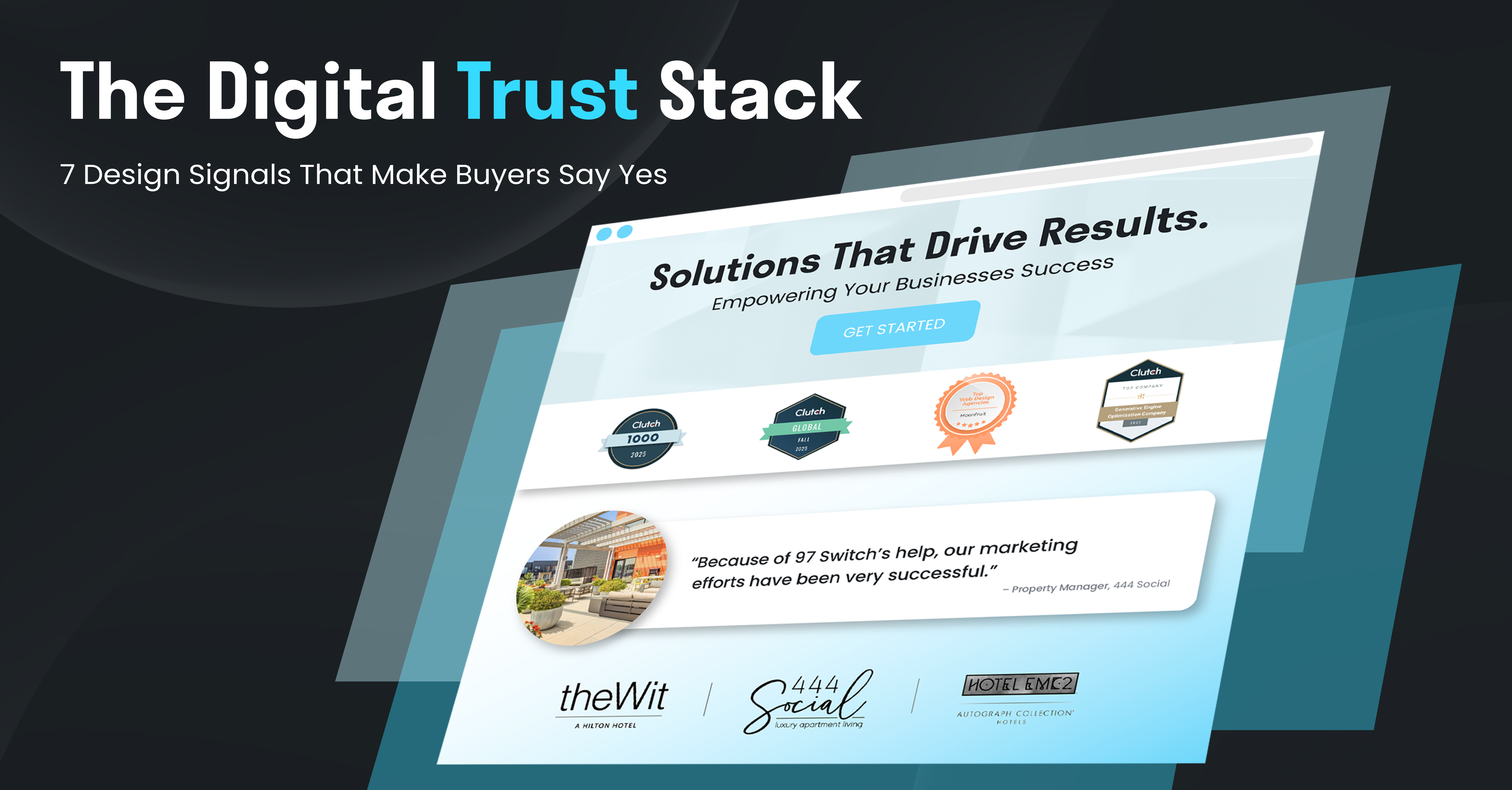
The Digital Trust Stack: 7 Design Signals That Make Buyers Say Yes
Buyers decide whether to trust you in seconds. Learn the 7 digital trust signals high-performing websites use to increase conversions and win more deals.
Most buyers don’t decide to trust you after reading every page of your website.
They decide in seconds.
Before they click “Contact,” before they request a demo, and often before they finish scrolling — buyers make a fast judgment:
“Does this look credible?”
“Do these people understand my world?”
“Can I trust them?”
In 2026, trust is your most valuable conversion lever. And trust is initially built — or lost — through your digital experience.
That’s why we use a framework called the Digital Trust Stack: seven design signals that consistently increase confidence, reduce friction, and move buyers toward action.
Why Trust Is Now the Real Conversion Metric
Buyers today are overwhelmed with options, cautious about risk, and increasingly self-directed.
They’re also researching more before engaging with sales — which means your website and digital touchpoints are doing more of the persuasion than ever.
Your product may be excellent. Your team may be world-class. But if your digital experience feels unclear, inconsistent, or outdated, buyers assume the same about the company.
Trust is no longer earned primarily through conversation. It’s earned through experience.
The 7 Design Signals That Build Trust
1) Clarity of Positioning
If a buyer can’t tell what you do in 5 seconds, trust drops immediately.
Trust Signal:
- A clear headline that names the category + outcome
- Specific language (not abstract)
- Immediate context for who you serve
Quick test: Could a new visitor explain what you do after reading your hero section once?
2) Visual Hierarchy
Hierarchy isn’t just “good design.” It’s cognitive ease.
When pages feel dense or disorganized, buyers feel uncertain — and uncertainty kills conversion.
Trust Signal:
- Strong typography system
- Scannable layout (headers, bullets, spacing)
- Clear primary CTA
Why it works: Hierarchy reduces mental load and increases confidence.
3) Consistency Across Touchpoints
A buyer might meet you through an ad, your homepage, a landing page, and then your sales deck.
When those experiences don’t match, trust erodes.
Trust Signal:
- Consistent design system (colors, typography, UI patterns)
- Consistent messaging and tone
- Consistent CTA patterns
Simple truth: Consistency is a trust shortcut.
4) Proof that Feels Real
Testimonials and logos are common. But trust comes from believable proof.
Not generic phrases. Not vague results. Real stories with specificity.
Trust Signal:
- Outcome-driven case studies
- Specific results (percentages, timeframes, metrics)
- Human evidence: quotes, faces, or credible attribution
Quick test: Does your proof feel like something a real buyer would say?
5) Speed & Mobile Experience
Performance is trust. If your site is slow, clunky, or hard to use on mobile, buyers assume your product or team might be too.
Trust Signal:
- Fast load time
- Mobile-first layouts
- Easy tap targets, clean spacing, readable text
Modern buyers don’t tolerate friction. They interpret it as a risk.
6) Frictionless Paths to Action
Trust often collapses when the path to conversion feels unclear.
Buyers ask:
“What happens when I click this?”
“Am I about to get spammed?”
“Is this worth my time?”
Trust Signal:
- Clear CTA copy (what you get + what happens next)
- Short forms
- Transparent next steps (“We’ll respond in 1 business day”)
Good UX reduces perceived risk.
7) Authority Signals That Calm Doubt
Trust is often the absence of doubt.
Authority signals quietly remove doubt without requiring persuasion.
Trust Signal:
- Awards and recognition
- Security/compliance mentions (if relevant)
- Credible partnerships
- Founder/team credibility
- Strong editorial content
These signals reinforce: “We’re established. We’re real. We know what we’re doing.”
The Shortcut: Don’t Add More — Align What You Already Have
Most companies don’t need a full rebuild to improve trust.
They need alignment:
- clearer positioning
- stronger hierarchy
- more consistent design
- proof that feels real
- better UX performance
- clearer conversion paths
Realistic changes, big impact.
Want a Quick Trust Stack Audit?
If you want an outside perspective, our team can run a short, practical trust audit of your website and key digital touchpoints.
We’ll identify the highest-impact improvements to increase trust and conversion.
Request a complimentary digital experience audit