Websites
Is Your Website Costing You Business?
An effective website builds credibility, supports AI and search visibility, and drives meaningful business results.
Most businesses don't think about their website until something feels off.
Maybe lead volume isn't where it used to be. Maybe competitors seem to be gaining traction. Maybe the website feels harder to manage than it should. Or maybe there's simply a growing sense that the business has evolved, but the website hasn't.
When these conversations happen, they often start with design.
The website looks dated. The branding feels old. The user experience no longer reflects the quality of the organization.
While those concerns are valid, appearance is usually just the symptom.
The bigger question is whether the website is helping the business achieve its goals.
A website can look acceptable on the surface while quietly creating challenges that affect visibility, trust, lead generation, and growth.
Your Website Is Often the First Impression
For many organizations, a website is the first meaningful interaction a prospective customer has with the brand.
Before reaching out, people research. They compare options. They evaluate credibility.
In many cases, they make an initial judgment long before speaking with anyone.
That judgment is influenced by everything from design and messaging to navigation, performance, and content quality.
A website that feels outdated can create uncertainty. Visitors may not consciously identify the reason, but they often leave with questions.
- Is this company actively investing in its business?
- Are they keeping pace with industry changes?
- Will they deliver the experience I'm looking for?
Trust is difficult to earn and surprisingly easy to lose. A website should strengthen confidence, not introduce doubt.
Visibility Is No Longer Just About Google Rankings
Search has changed significantly over the last several years.
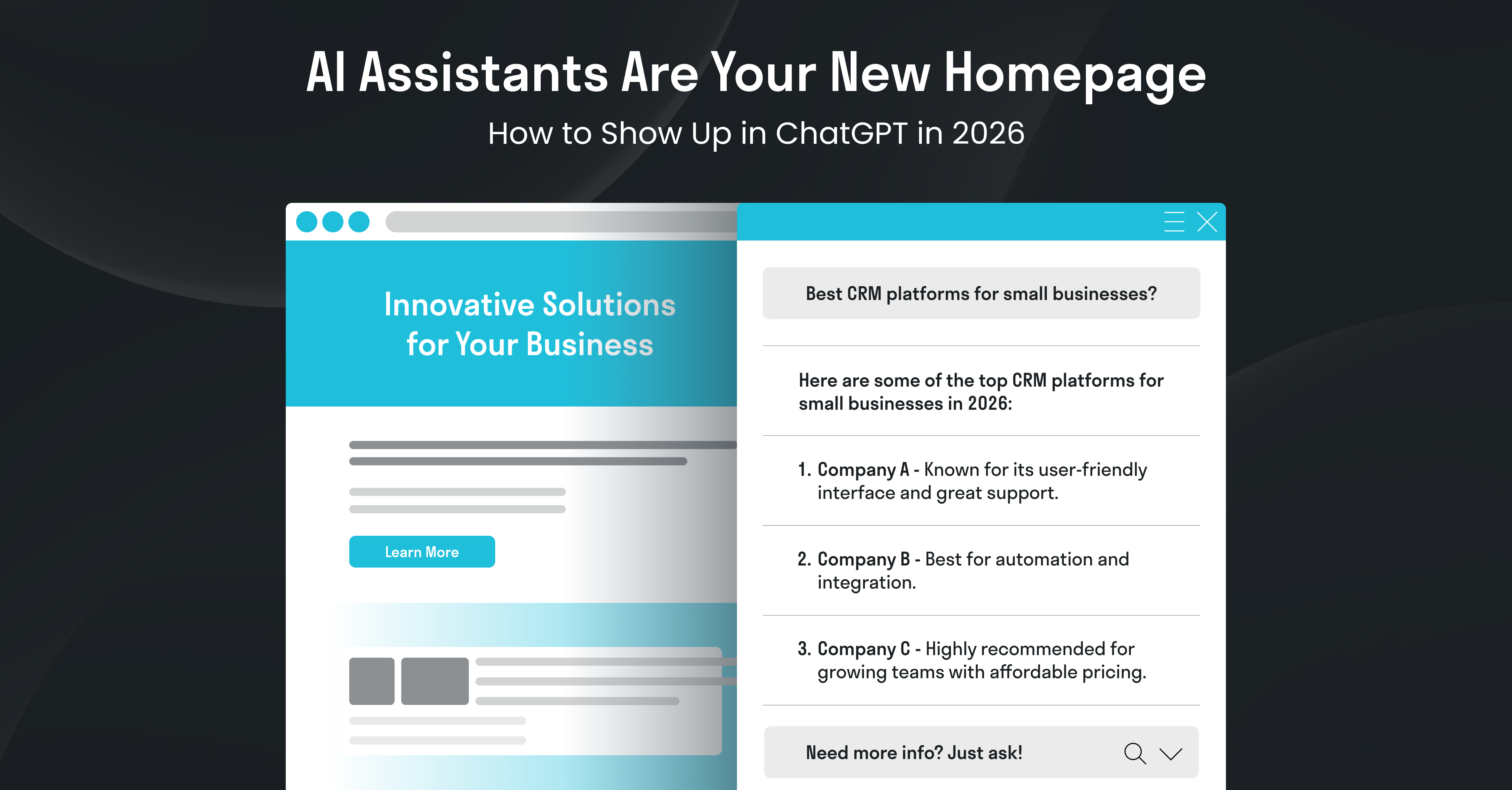
Businesses are still competing for visibility in traditional search results, but they are also competing for visibility in AI-powered experiences that help users discover and evaluate companies.
Whether someone is using Google, ChatGPT, Gemini, Perplexity, or another platform, the expectation remains the same. People want clear, credible, useful information.
Older websites often struggle because they were built for a different internet.
Content may be difficult to navigate. Important information may be buried. Service pages may be thin. Site architecture may no longer support how people search today.
The result is not always a dramatic decline in traffic. More often, it is a gradual loss of visibility over time.
When a Website Creates Friction, Opportunities Are Lost
One of the most common challenges we see is a disconnect between traffic and results.
Organizations invest in marketing, content, SEO, and advertising to attract visitors, but the website itself creates obstacles.
Messaging lacks clarity. Calls to action are difficult to find. Navigation feels confusing. Mobile experiences are inconsistent. Visitors arrive, but they do not take the next step.
The difficult part is that these opportunities are largely invisible. Businesses rarely know how many potential customers chose not to contact them. They only see the outcome: slower growth and fewer qualified conversations.
Internal Challenges Matter Too
The cost of an outdated website is not limited to customer experience.
Many organizations continue operating websites that are difficult to maintain. Simple updates require technical support. New pages take longer than expected to launch. Content becomes outdated because making changes feels cumbersome.
Over time, these small inefficiencies compound. Marketing teams become less agile. Opportunities take longer to execute. Internal resources are spent managing technology rather than supporting growth.
A website should be an asset that empowers a team, not a system that slows it down.
The Relationship Between Website Performance and Talent
Customers are not the only people evaluating your website. Prospective employees are too.
Top candidates often research an organization before applying. They want to understand the company's values, culture, expertise, and direction.
A modern, thoughtful digital experience can reinforce a company's commitment to quality and innovation. An outdated experience can unintentionally communicate the opposite. For organizations focused on attracting strong talent, the website has become an important part of the recruiting experience.
The Real Question
Many businesses ask whether they need a new website. A better question is whether their current website is supporting the future of the business.
An effective website should build trust, support visibility, generate opportunities, and create a seamless experience for both customers and internal teams. If it is no longer accomplishing those goals, the issue is rarely cosmetic. It is strategic.
How to Evaluate Your Website
If you're unsure whether your website is helping or hurting your business, start with a few simple questions.
- Does the website accurately represent who we are today?
- Does it make it easy for prospective customers to understand our value?
- Does it support our visibility in search?
- Does it create confidence and trust?
- Does it help our team move efficiently?
- Does it support where the business is going next?
The answers often reveal more than analytics alone.
Is Your Website Supporting Where Your Business Is Going?
Most organizations don't realize their website is creating friction until they take a step back and evaluate it through the lens of business goals, customer expectations, and modern search behavior.
Whether you're considering a redesign, evaluating your digital strategy, or simply trying to understand what's working and what isn't, an outside perspective can often uncover opportunities that are easy to miss.
At 97 Switch, we help organizations assess their digital presence, identify areas for improvement, and create websites that support long-term growth.
Interested in a conversation about your website strategy? Let's connect.